

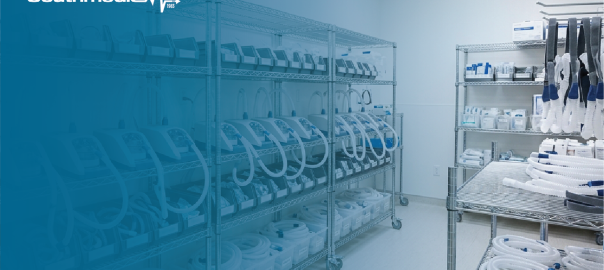
High-flow nasal cannula (HFNC) works. It does. In fact, some in the Respiratory world might even say it is the greatest advancement in Respiratory Care in the last dozen years or so. Popularized through the pandemic when critical care resources were stretched like an old cracking rubber band, HFNC ‘saved the day’ in many cases by reportedly delaying the need for intubation and taking the stress off ICU’s who had a lack of ventilator access by: washing out patient dead space, promoting better gas exchange, providing a little PEEP (albeit uncontrolled PEEP) and being comfortable for patients. RRT’s grew to love HFNC and rightly so! It’s a great tool in the RRT’s toolbox for a multitude of patient care scenarios where someone is in acute and rapid decline. But is there even a chance that maybe we’ve fallen head over heels too much with giving 70lpm? Was HFNC created to replace conventional oxygen therapy (COT) devices? We know the principal indications for HFNC include: treating patient desaturations due to ↑work of breathing (WOB) and air hunger, patients who have increasing difficulty expectorating due to thick, tenacious, copious secretions, HFNC can be used as a step down approach for post extubationRead More…
All posts by kfarhat
More than 20 years ago, Southmedic set out to solve a longstanding problem in respiratory care: traditional closed‑in oxygen masks were uncomfortable, claustrophobic, and often caused patients to remove them – interrupting therapy and creating unnecessary alarm events for caregivers. Drawing from my clinical experience in critical care nursing, the idea for a new kind of oxygen device emerged unexpectedly from a simple telephone headset. If a microphone could be precisely positioned in front of the mouth, why couldn’t oxygen be delivered just as intentionally? This concept led to focus groups with nurses and respiratory therapists, who unanimously agreed that traditional masks needed improvement. There had to be a better way. Transforming this idea into reality required years of design refinement and scientific validation, supported by experts at McMaster University and Western University. The result was the first OxyArm: an open, headset‑style device using a patented mushroom‑pin diffuser to create high‑velocity vortices of oxygen directed at the patient’s airway. It dramatically improved comfort and patient compliance, but placement variability revealed the need for a more consistent delivery method. To maintain oxygen performance without returning to the drawbacks of closed masks, Southmedic began designing an open mask that allowed carbon dioxideRead More…
